Sponsored content

AM2R programme nears completion: a transformed two‑wheel industry

As Portugal's AM2R programme nears completion at the end of 2025, the country's two-wheel industry stands transformed. Launched with the backing of the EU's Recovery and Resilience Plan, the project managed to unite 47 companies and institutional partners under the coordination of ABIMOTA, Portugal's national two-wheeler association.

Abimota

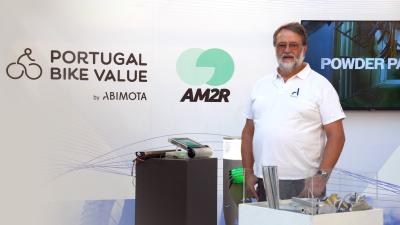
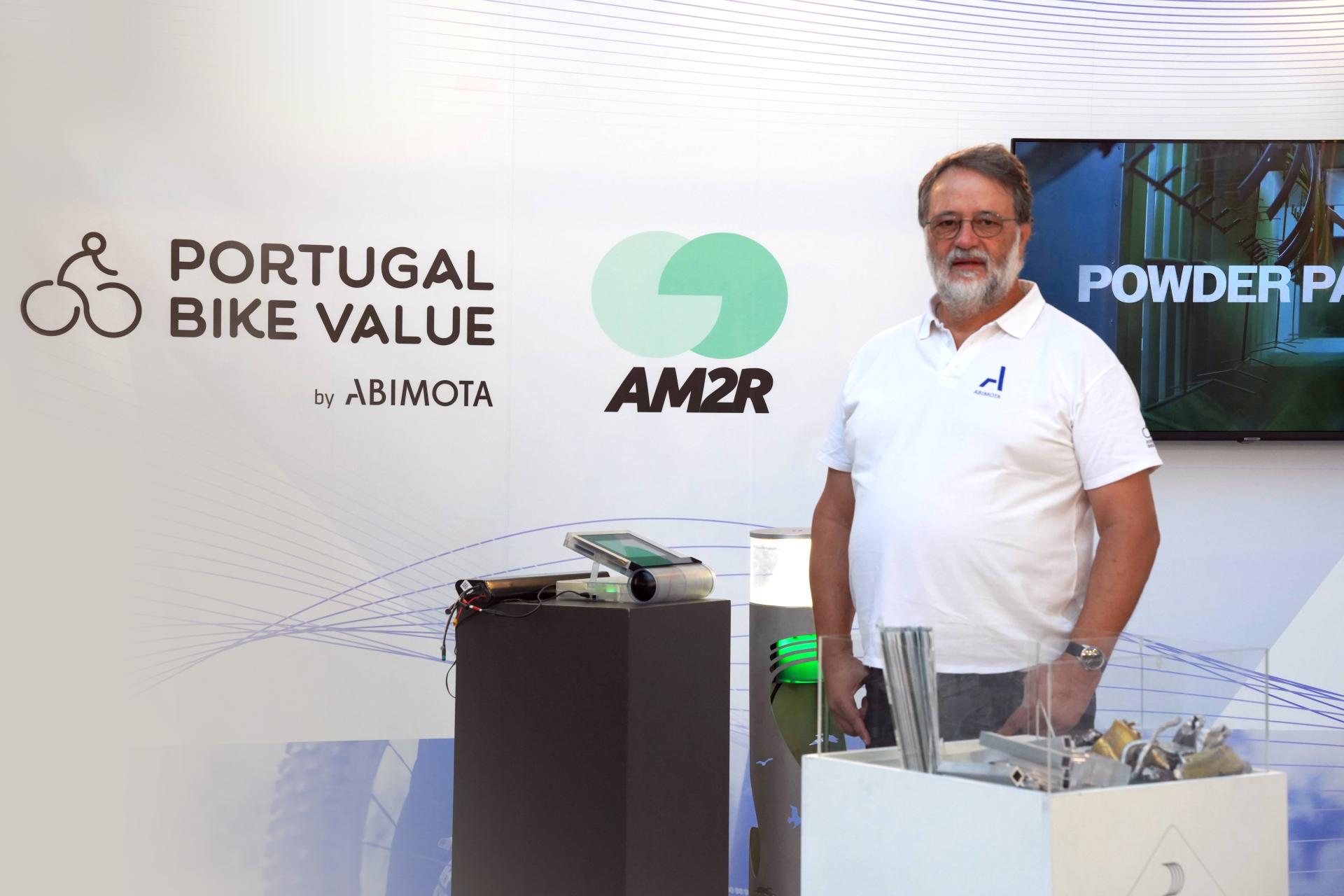
Gil Nadais, ABIMOTA's Secretary-General.


The aim of the AM2R initiative was to accelerate digitalisation, strengthened supply chains, boost innovation capacity, and position Portugal as a recognised European hub for sustainable mobility, and it did just that.

According to Gil Nadais, ABIMOTA’s Secretary-General, “AM2R has paved the way to reshaping Portugal’s two-wheel ecosystem by advancing digitalisation, productivity and competitiveness, as well as transitioning from contract manufacturing to design-driven, high-value production.”

Streamlined manufacturing

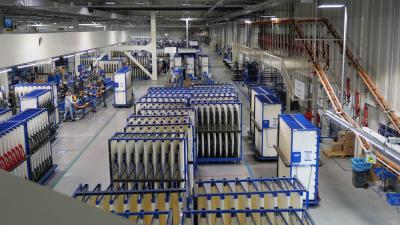
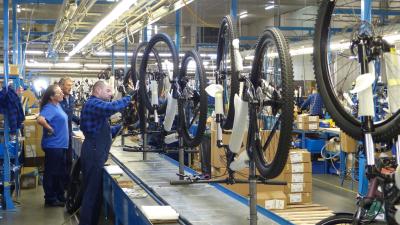
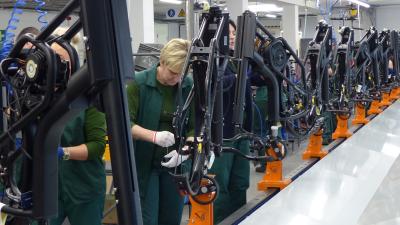
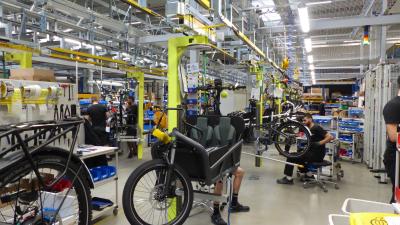
With €213 million invested in Industry 4.0 technologies, the AM2R initiative has delivered measurable gains across the Portuguese two-wheel sector. Companies have adopted automation, cobots (collaborative robots), digital twins, additive tooling, and intelligent assembly technologies in order to yield improvements in both quality and delivery.

“For example, participating organisations have reported production output increases of roughly 10–20 percent, double‑digit reductions in rework, and noticeably shorter development cycles, all driven by digital prototyping and data‑driven processes. These gains are the result of a current R&D programme that remains confidential and is not yet available commercially.”

“Implementing digital twin–enabled design has allowed participating companies to bring new models to market one season earlier,” Nadais explains. “We have also seen cost reductions through vision-based quality assurance, and a major boost in real-time monitoring and traceability.”

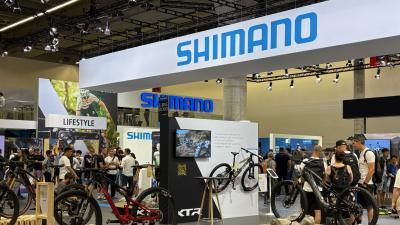
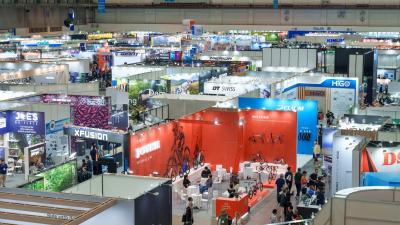
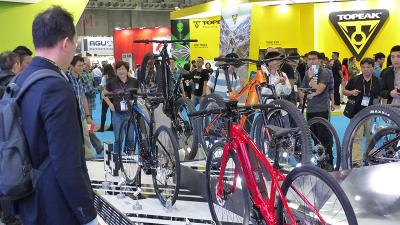
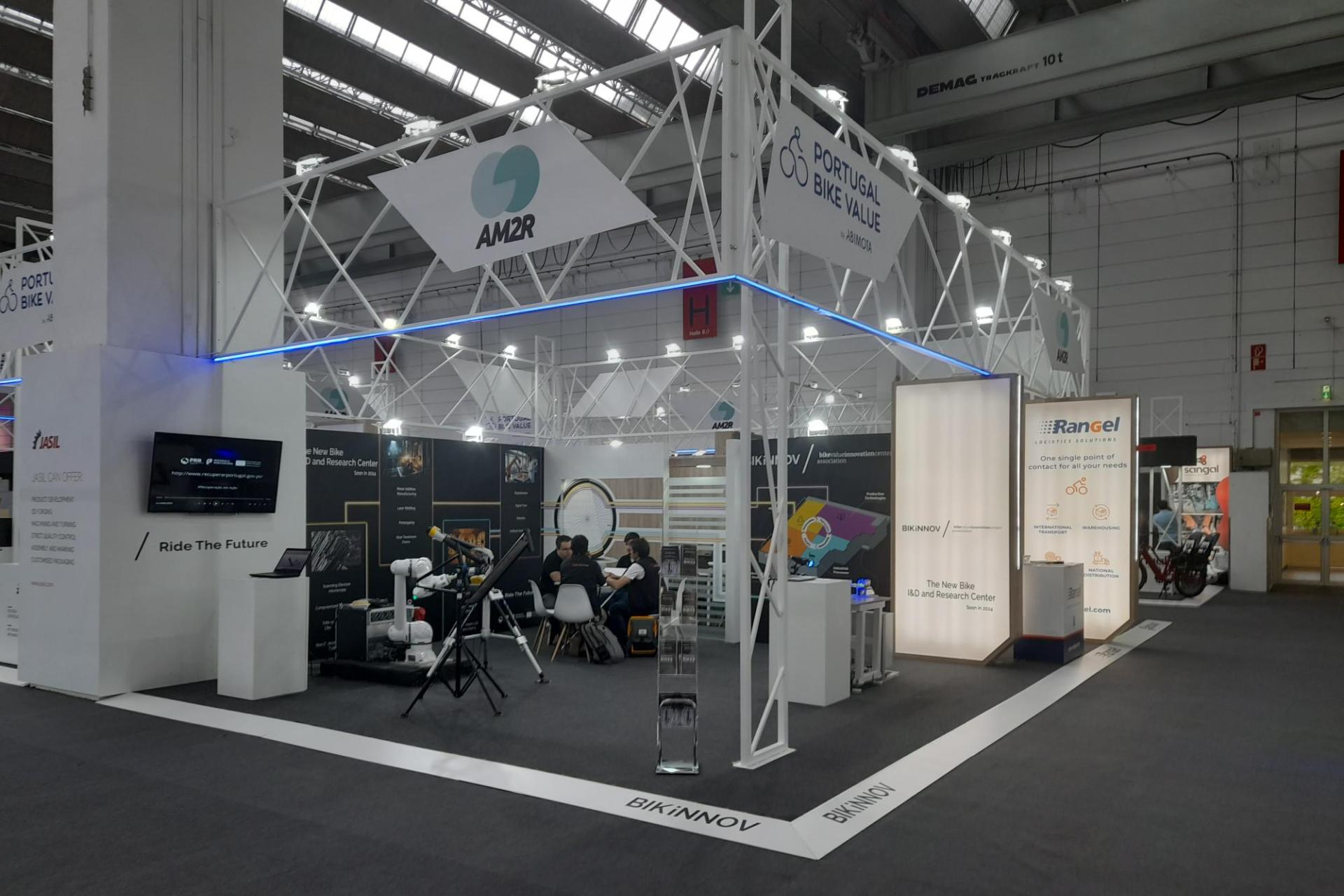
Exhibition stand

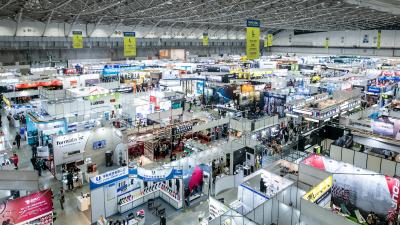
Internationally, AM2R has elevated Portugal’s visibility through coordinated showcases at Eurobike (this photo), IAA Mobility, and Expo Osaka 2025.

One of the clearest structural shifts however, has been the move from OEM to ODM business models. AM2R has helped manufacturers develop their internal design capabilities, securing intellectual property, and transitioning toward high-value products, especially in e-mobility.

While the full transformation is still in progress, and time can only tell, the foundations are, at least, firmly in place. As Nadais notes, “This kind of progress is continuous. The AM2R programme has accelerated this shift into hybrid OEM and ODM models, to bring design autonomy and product differentiation.”

Strengthened supply chains

A major objective of the AM2R was to reduce the dependency on extra-EU suppliers. The newly created “One Stop Solution” logistics platform has improved visibility across the supply chain, enhanced export coordination, and reduced lead-time variability.

At the same time, sustainability and circular‑economy principles have become an important focus. A large portion of the companies within the AM2R consortium have adopted modular design, recycled materials, low‑carbon resins, energy‑efficient manufacturing techniques, and LCA‑based decision‑making. Initiatives such as take‑back, refurbishment, and product‑as‑a‑service pilots have been launched, laying the groundwork for more circular business models.

“AM2R members have integrated circular measures across the entire lifecycle from design, and materials to production and end-of-life,” says Nadais. “This is essential for aligning with Europe’s 2030 sustainability goals.”

“We plan to leverage international visibility, attract investment, and create pooled R&D funds to ensure continuous innovation”

Embraced R&D culture

The establishment of BIKiNNOV as well as collaborating with universities has been crucial in accelerating Portugal’s innovation capabilities. Joint R&D activities have already produced breakthroughs in e-mobility platforms, lower-carbon materials, and rapid tooling technologies.

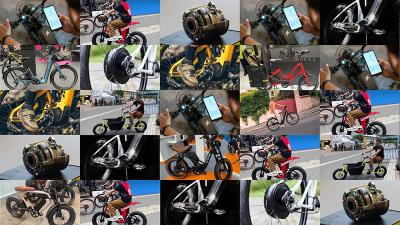
“We now have e‑bike platforms, designed in Portugal, that are already being tested for export markets,” Nadais notes. “Beyond high‑value manufacturing, our Industry 4.0 shop‑floor systems and digital prototypes accelerate time‑to‑market, while the new material developments we’re co‑creating reduce environmental impact and support a circular‑economy approach.”

Continuity beyond 2025

With the project concluding December 2025, ABIMOTA is preparing a framework to sustain momentum beyond its EU funding. The plan includes cluster coordination, expanded industry services, and converting pilot activities into fee-based offerings such as training, certification, logistics, and technology transfer.

“We aim to maintain the AM2R ecosystem long after the grants end,” Nadais states. “We plan to leverage international visibility, attract investment, and create pooled R&D funds to ensure continuous innovation.”

Internationally, AM2R has elevated Portugal’s visibility through coordinated showcases at Eurobike, IAA Mobility, and Expo Osaka 2025. These efforts support the sector’s transition into a competitive, innovation-driven European manufacturing hub.

Looking ahead, his vision is clear: “Portugal will be an active partner in a European network of high-value, sustainable two-wheel mobility. The AM2R legacy will be stronger design capabilities, strengthened university collaboration, and international partnerships that de-risk innovation and support long-term competitiveness.”

Explore the future of Portuguese bike manufacturing; visit the website or meet them at a 2026 bike show near you.

This article is sponsored by ABIMOTA.