Precision drives Pirelli's bicycle industry comeback

A repurposed automotive tyre factory on the outskirts of Milan was Pirelli's vision when it strategically decided to re-enter the bicycle tyre market in 2017. Operational since 2022, the factory prides itself on 'Made In Italy' premium quality bicycle tyres. Supported by "the broad shoulders" of the multi-billion-euro turnover of the Pirelli Group, the factory has a maximum capacity of 1.5 million FSC-certified natural rubber tyres annually — with plenty of opportunity for growth. What more reason to visit the factory floor at… Pirelli.
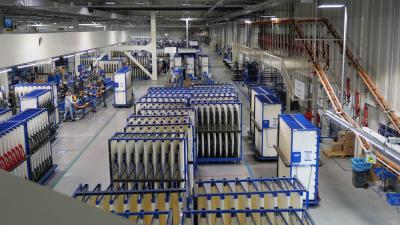
Nestled in a quiet neighbourhood on the outskirts of Milan, the Bollate factory was originally built in 1960 to produce rubber products. Car tyre production began here in 1988. These were produced here as late as 2019, when the repurposing of the factory for bicycle tyre production began. For its re-entry into the bicycle market, Pirelli has invested “a high”, but undisclosed amount of funds into upgrading the factory with high-precision automated machinery, lean manufacturing and the most advanced health, safety and environment (HSE) practices.

Industrial-scale production in Europe

Pirelli is the only company in Italy manufacturing bicycle tyres on an industrial scale. It can remain competitive with European production by leveraging over 100 years of knowledge in the performance tyre sector, particularly in motorsports. As the exclusive tyre supplier to Formula 1 since the 2011 season, Pirelli applies this critical precision and high-performance approach to bicycle tyre production. This naturally positions the P Zero, Cinturato and Scorpion products manufactured in Bollate in the premium segment.

“The Pirelli group has long been dedicated to the upper part of the market,” explains Stefano Gadda, CEO of P.I.P. (the company that combines Pirelli's two Italian factories: Settimo Torinese, in Turin and Bollate) and Plant Manager Pirelli Bollate. “By choice, the same production model is applied to the bicycle business unit as with automotive. In automotive, having partners such as Ferrari or Lamborghini reflects a difference in industrial set-up as the volumes are lower, but precision is higher, which brings an added complexity.”

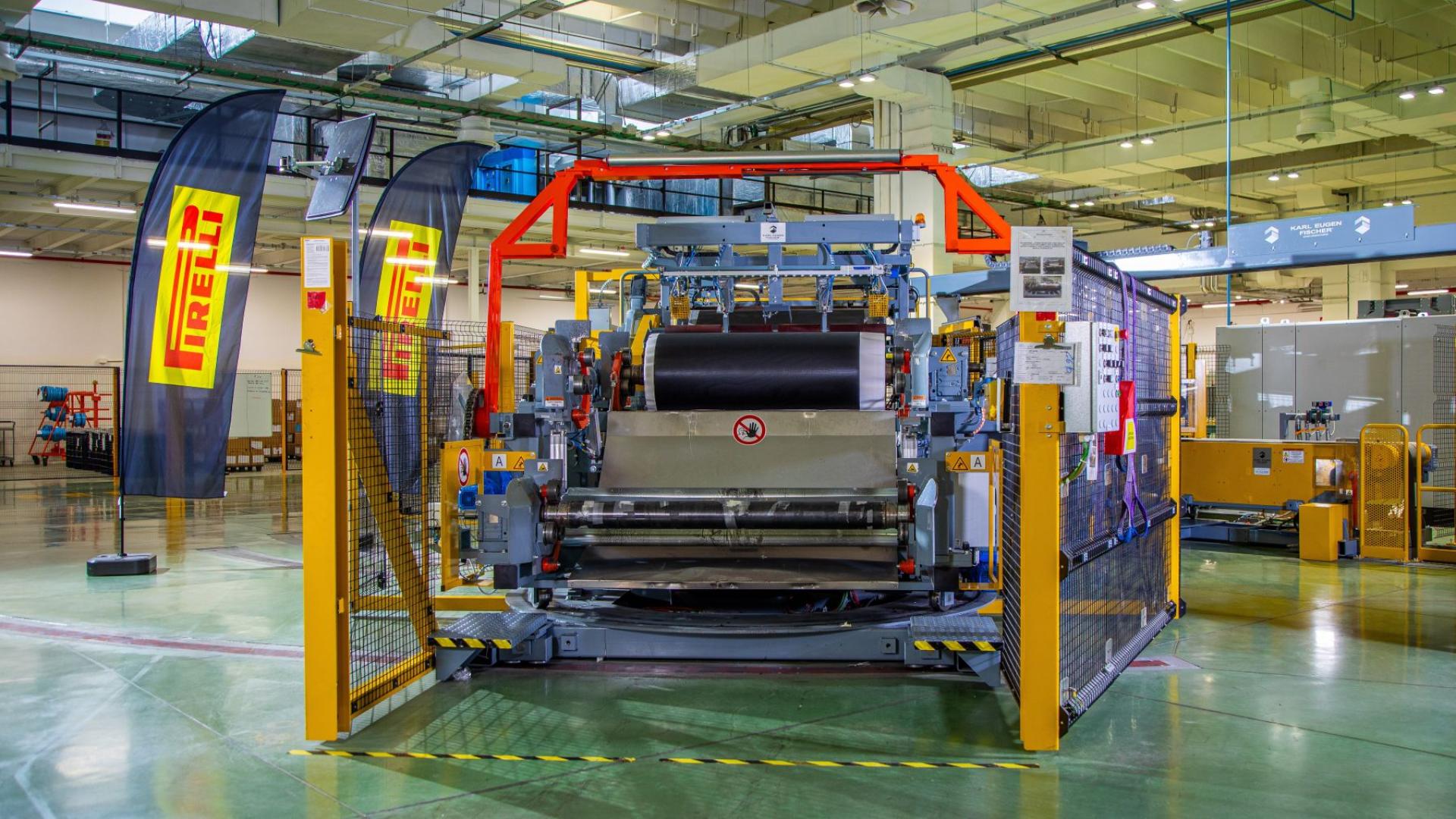
Pirelli Cutting machines

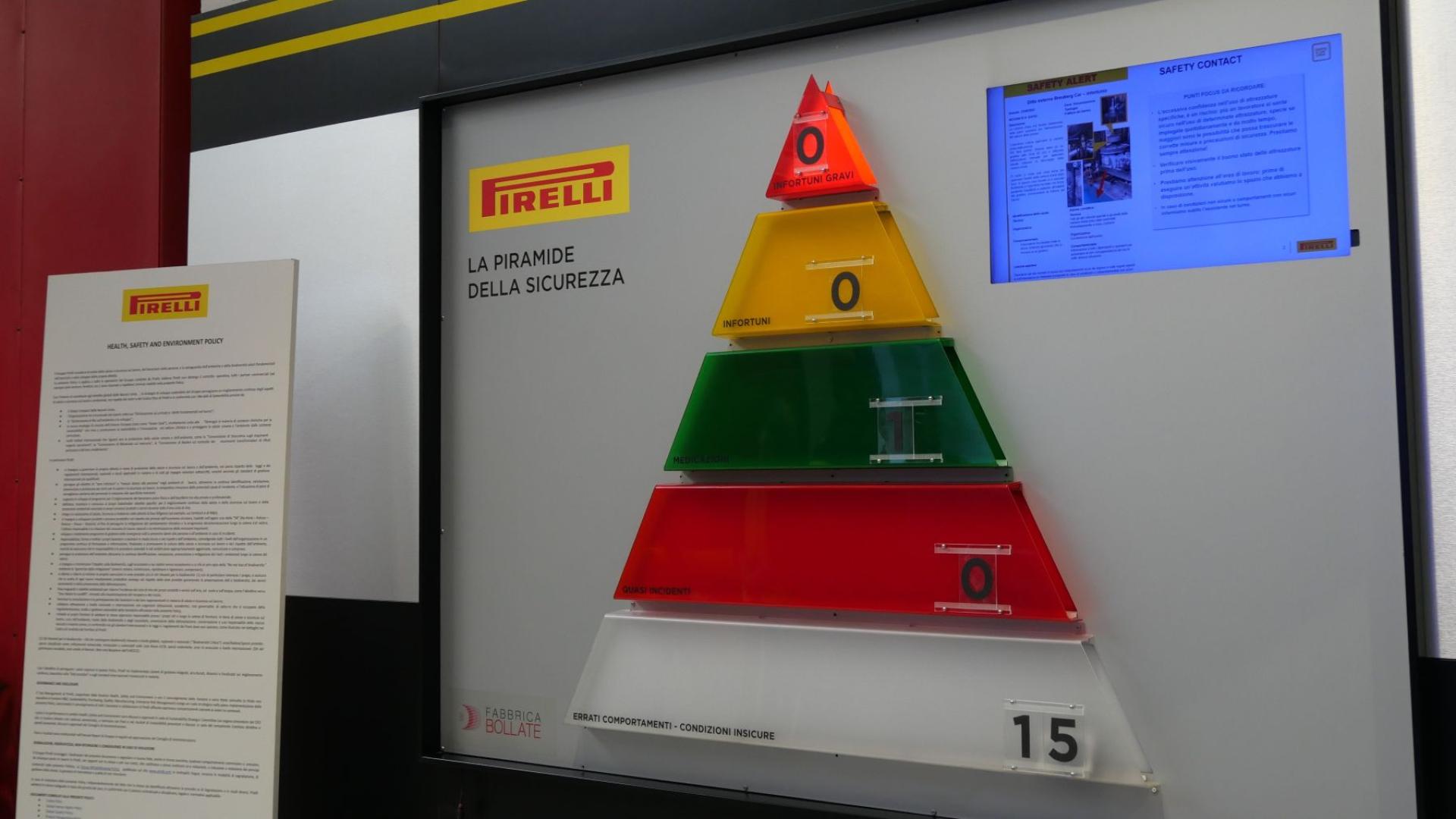
Pirelli High HSE goals

Complex four-stage process

The Pirelli group owns 18 factories worldwide. The two in Italy, located in Bollate and Turin, are essential for the bicycle business. The Bollate factory is supplied with a pre-mixed compound that, for the most part, is prepared at the Settimo Torinese factory in Turin. This is then followed by a highly automated, four-stage process. On entry, the compound is fed into what is called “the monster machine.”

This high-performance triplex extruder runs a length of 40 metres, and the tread compound is extruded, shaped, cooled and cut into the required profile. Lasers auto-regulate the quality every six metres, and faulty segments are automatically removed. On the other side of the factory, the casing is created using a rubberised fabric measuring a few tenths of a millimetre, with a polyamide pattern and, eventually, aramid fibre trims. These pass through automatic cutting machines where rotating blades cut the textiles to specific widths for different tyre types (road, gravel, mountain bike).

Central corridor for tyre building

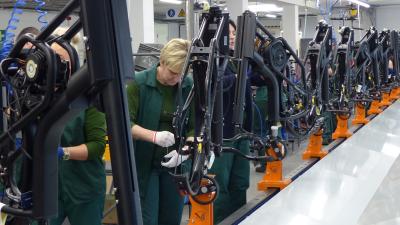
For the tyre building, the components from both sides are brought to a central production line corridor. The Bollate factory has 12 identical building machines, operating in two lines of six, which offer full flexibility in production. Each automated assembly machine wraps the casing fabrics onto an electronic drum. The diameter is adjusted per tyre type. With HSE in mind, all machines will stop the process if an operator passes an optical barrier. The tread compound is added to the assembly, along with puncture-protection layers. The outcome is a "green tyre,” which is in its final shape, and given a barcode linking all of its production metadata, which will be scanned in every part of the process.

Cabin-housed vulcanisation process

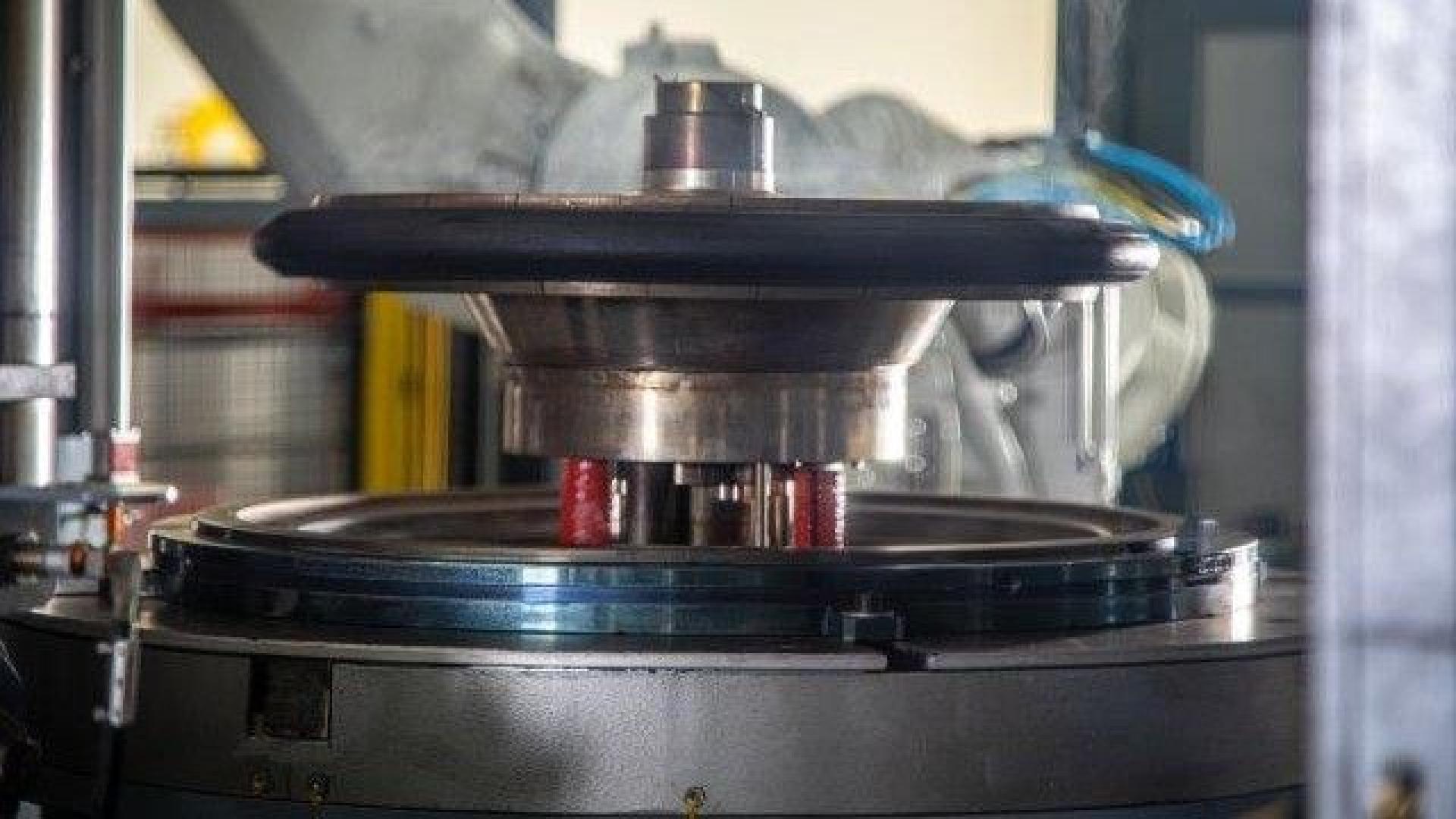
The green tyre is then transferred to a robotised curing press. During vulcanisation, the only manual step is loading a green tyre onto a support, which a robot will then pick up and place onto the mould. This means that the operator does not go near the area where the vulcanisation actually takes place – and therefore does not go near parts that are very hot. Via one of six robots, the tyre undergoes vulcanisation, where high temperature and pressure, combined with heat-resistant materials, transform the rubber from a plastic state to an elastic, durable, and uniform state. This step also imprints the tread pattern and sidewall graphics. This process takes 3-4 minutes per tyre.

Pirelli Cycling Division – At a glance

Location: Bollate, Italy. (Close to Pirelli HQ in Milan)
Established: Factory building in 1960; industrially operational for bicycle tyres since 2022
Size of location: 34,000m2 at Bollate Factory
What is being produced: Premium FSC certified bicycle tyres and premium inner tubes
Annual maximum capacity: 1.5 million units
Main export markets: Italy, Spain, US and UK
Number of employees: 210 in the Bollate factory, 25 in the Bicycle business unit in HQ. (Worldwide: approx. 31,000)

Remarkably, this area is light and airy, atypical of a tyre factory. The robots, all European-made to guarantee quality, are housed in windowed cabins to contain fumes. These are extracted and 100% filtered before being released. The natural light coming through large window panels, which offers better conditions for operators, is also filtered in a special way to protect against any harmful impact on uncured rubber.

Manual quality control

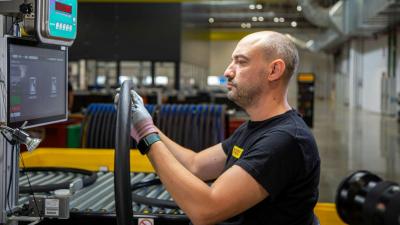
The finished tyre is automatically removed from the press, ready for final inspection and quality control. This is a 100% manual process as every tyre is scanned and weighed. Each tyre undergoes a visual inspection for defects before being forwarded to packaging or scrapped. Pirelli operates a 5% margin on the weight of each individual tyre. Scrapped tyres do not re-enter the process but are recycled for rubber, for use outside of the bicycle industry.

The production area for bicycle tyres occupies 45% of the space originally used for automotive tyres. “Of course, it’s a smaller product and the machinery is much smaller, so this space reduction does not signify a downsizing in capabilities,” explains Stefano Gadda, CEO and Manager of the Bollate factory. Gadda confirms that all existing employees helped transition the factory from automotive to bicycles, and many remain today following extensive retraining to support the production of a compact, lightweight product. The factory operates 24 hours a day, seven days a week, in three shift patterns. It only closes for two weeks in the summer and one week in December for annual maintenance.

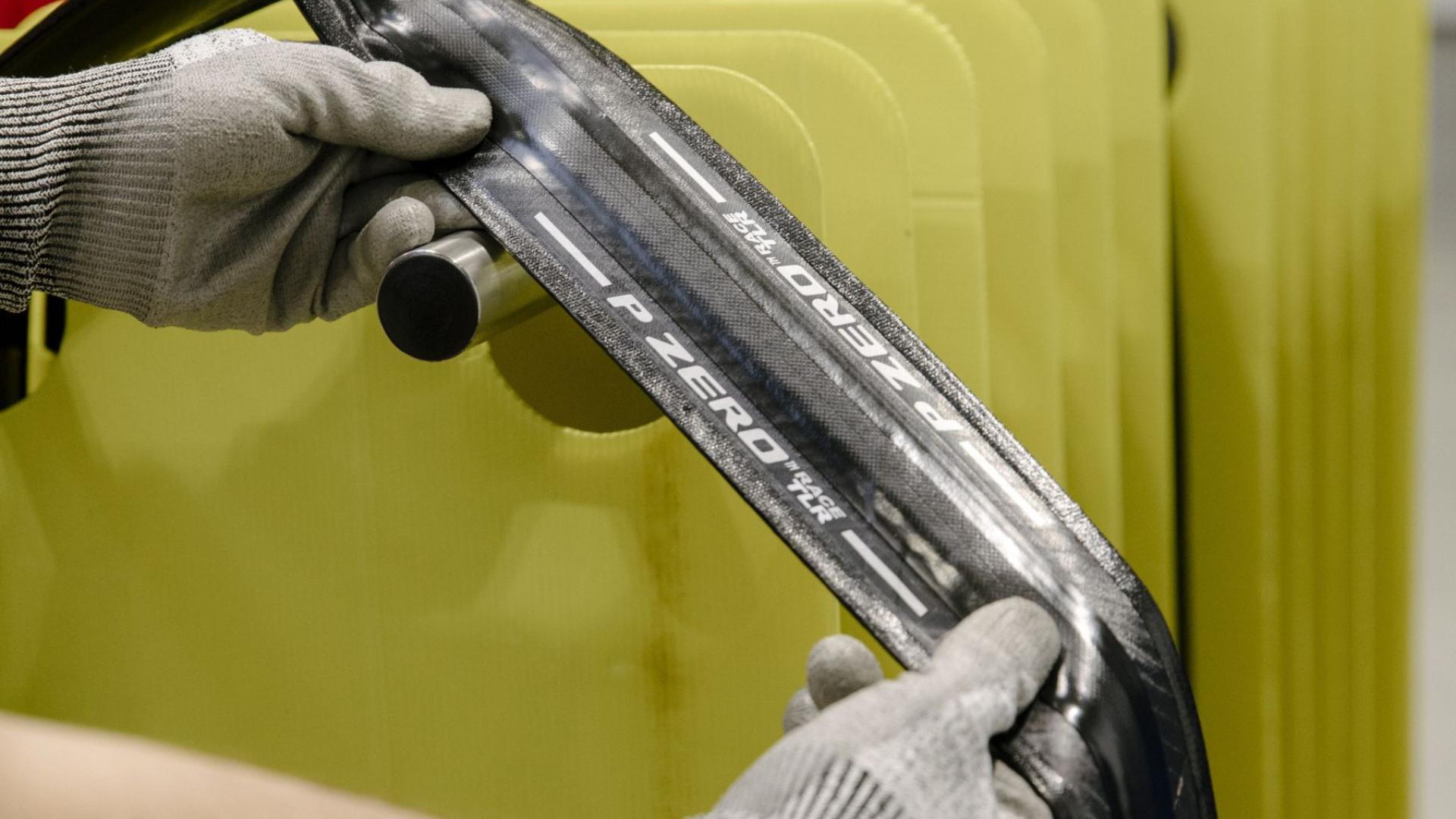
Pirelli green tyres before curing

Pirelli Tyres ready for the curing phases

Centralised R&D competencies

The R&D lab, which occupies a large area of the Pirelli HQ campus, houses five processes in one location. Employees from across all product categories work in the same laboratories, ensuring a quick exchange of information and reaction times. Both chemical and physical testing is taking place. Two floors are dedicated to chemical laboratories, including polymer development and reverse engineering.  One floor is used for all types of static testing with bicycle tyres occupying the same space as Formula 1 tyres. A large area in the basement is used for dynamic testing, including rolling resistance, characterisation of tyres, noise and mileage. 

“The data from all this lab testing is compared to numbers objectively coherent to road tests,” explains Samuele Bressan, Head of Global Marketing - Cycling Division. To this end, besides being specified on world tour team bikes, four people, based in Sicily, are employed full-time to test the tyre performance and rider feeling in real-world conditions. “All these riders speak the ‘engineer’s language’. This makes it easy to communicate and in a different way to pro-team rider feedback. They’re also running blind tests. This further ensures the high-performance and longevity of our products.”