Dutch heritage meets high-tech at Gazelle

Companies with a 100-year history in the bicycle industry are pretty hard to come by. Gazelle in the Netherlands, owned by Pon since 2011, is one such company. The company is so proud of its craftsmanship, which dates back to 1892, that a public walkway hangs over its factory in the Netherlands. This expertise extends across the entire chain, including its relationship with dealers, making it a leading brand in the Benelux.

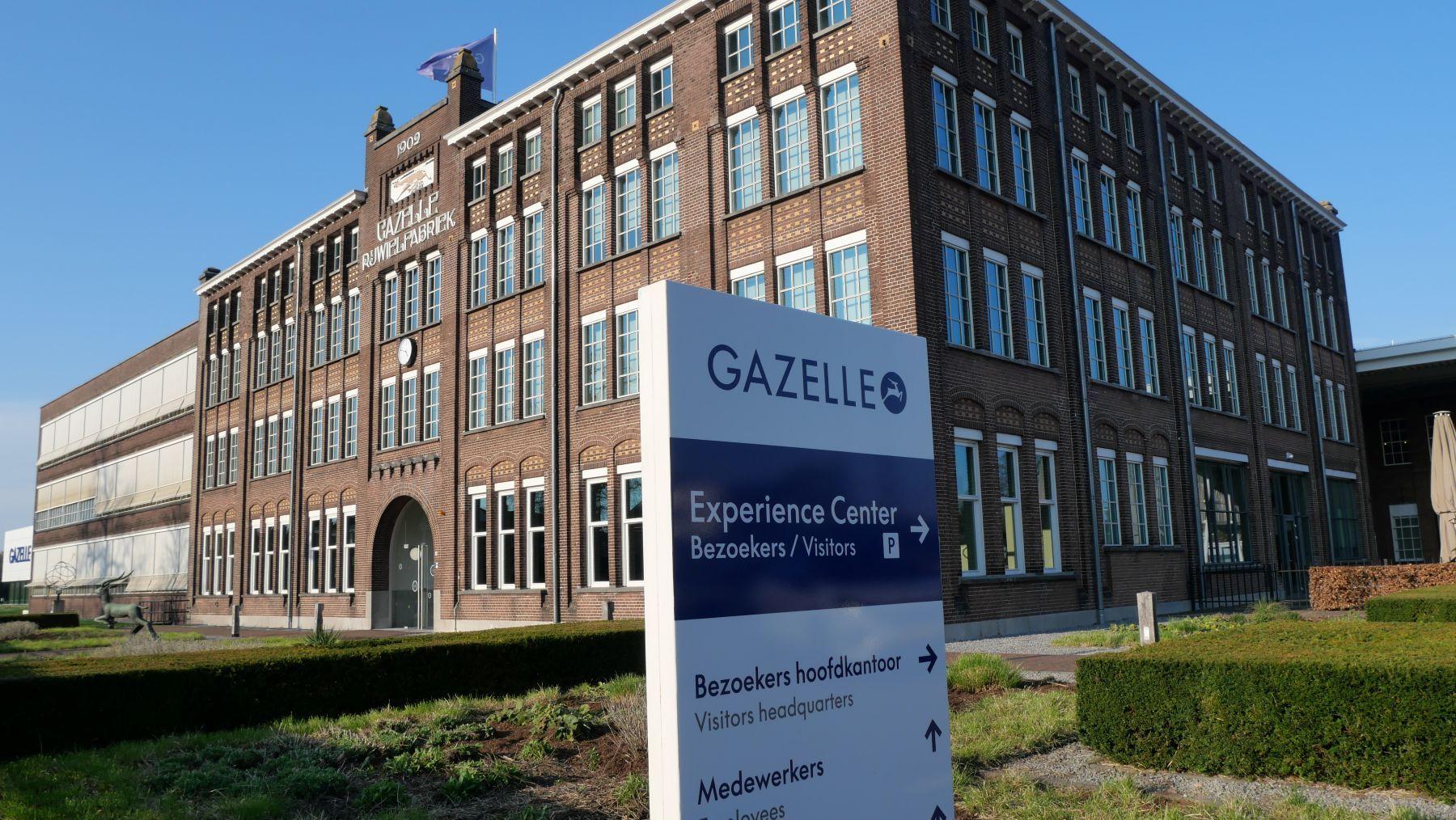
History exudes at the Gazelle location in Dieren, a quiet, unassuming town on the edge of one of the Netherlands’ largest national parks. The location not only houses the factory and offices of Gazelle employees, but also an experience centre for test rides and a museum dedicated to the brand's history. And that history is extensive.

A brand is born

Founded as Arentsen & Kölling (A&K) after the names of its two founders, the company originally imported and sold bicycle parts. After 10 years, the founders bought the current location with the intention of building their own bikes. It was at this moment that a model name was needed for the bikes coming out of the factory. Inspired by the deer in the local national park, the founders chose the name Gazelle to replicate the speed and elegance reflected in the company’s products. For better brand recognition, the company name evolved into Gazelle, and new model names emerged as the brand grew.

‘Royal Dutch Gazelle,’ as it’s officially known since its centenary in 1992, is the only Dutch manufacturer in the bicycle industry with a royal predicate. “When you have it, you have to work hard to keep it,” explained Erik van Houweling, manager of product marketing and assortment at Gazelle on the day of Bike Europe’s visit. Just one look at the details in the factory shows that the company is not just looking to preserve its history, but build on it.

Gazelle Factory
Gazelle Factory Floor
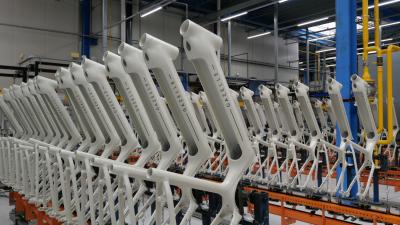
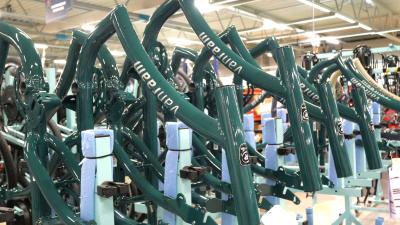
Gazelle frame in factory
Gazelle Factory Floor

18 million bicycles

At some point in 2026, Gazelle will celebrate the production of its 18 millionth bike. Not all of those bikes will have rolled off the production line in Dieren, as Gazelle also relies on the additional production capacity of Pon’s newest facility in Lithuania. But the historic factory remains Gazelle’s central hub for production, innovation and quality control. “We have built all kinds of bikes in this building, from mountain bikes to cargo bikes,” explained van Houweling. “But today our strategic focus is on urban and leisure bikes across six categories, with a focus on next-level comfort and design.”

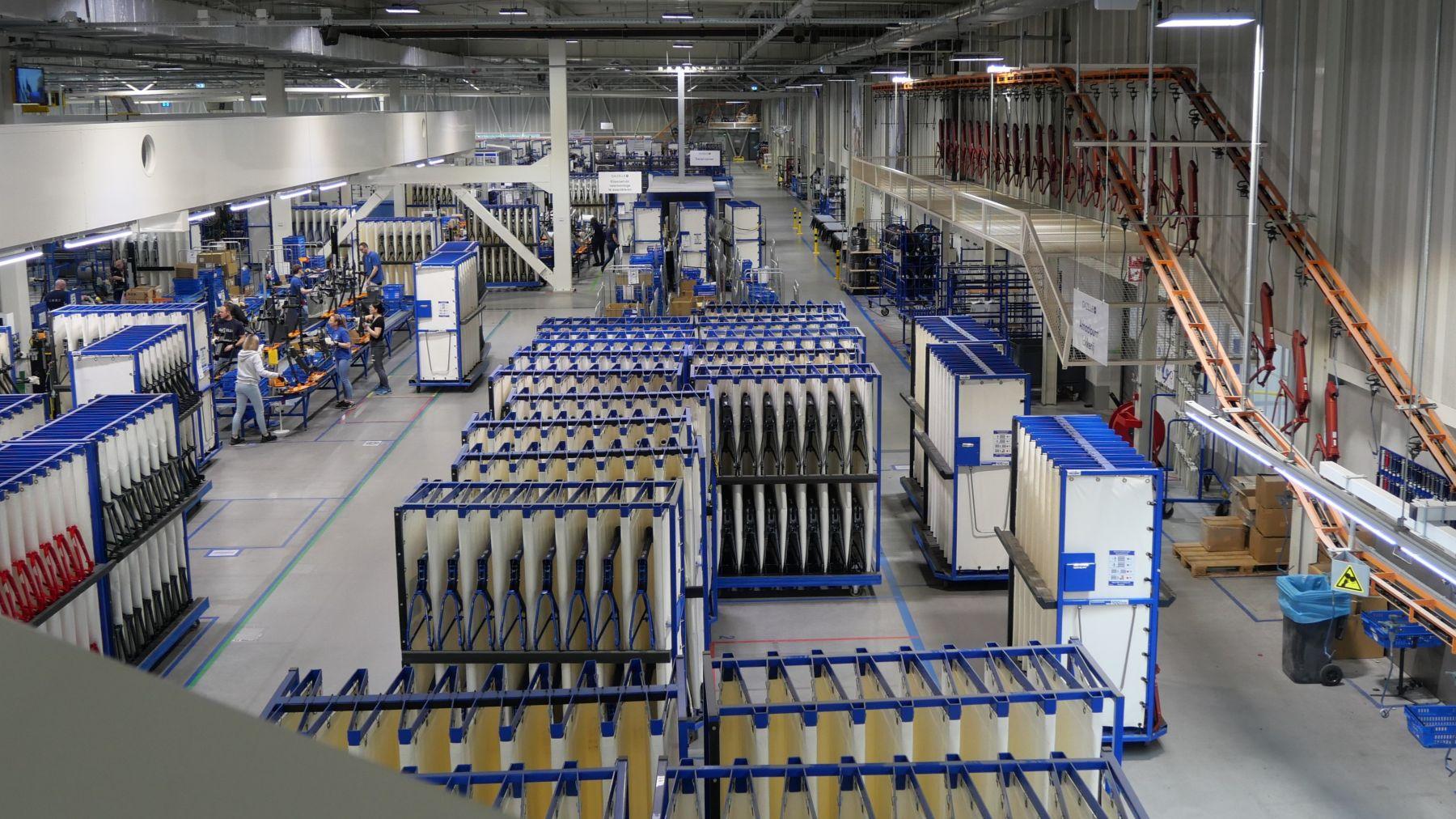
Gazelle’s key markets are the Netherlands, Germany and Belgium. These are mature e-bike markets, but traditional bicycles still account for one-third of the brand’s sales. Considering this shift in range, the factory was expanded and remodelled in 2015 to create space for Gazelle’s ongoing growth and development. The original factory building now houses the Innovation & Production Centre, and a new 7,000-square-metre assembly shop was built between the existing factory buildings and the historic main building. This new assembly building houses the bicycle assembly lines and the automated paint shop.

1,000 e-bikes built per day

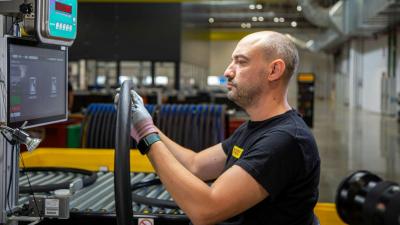
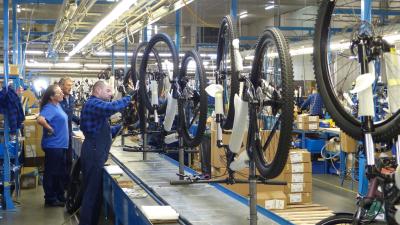
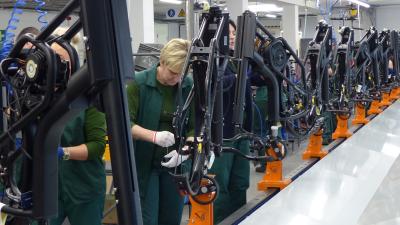
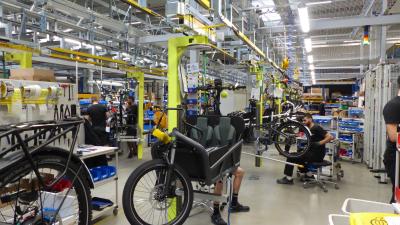
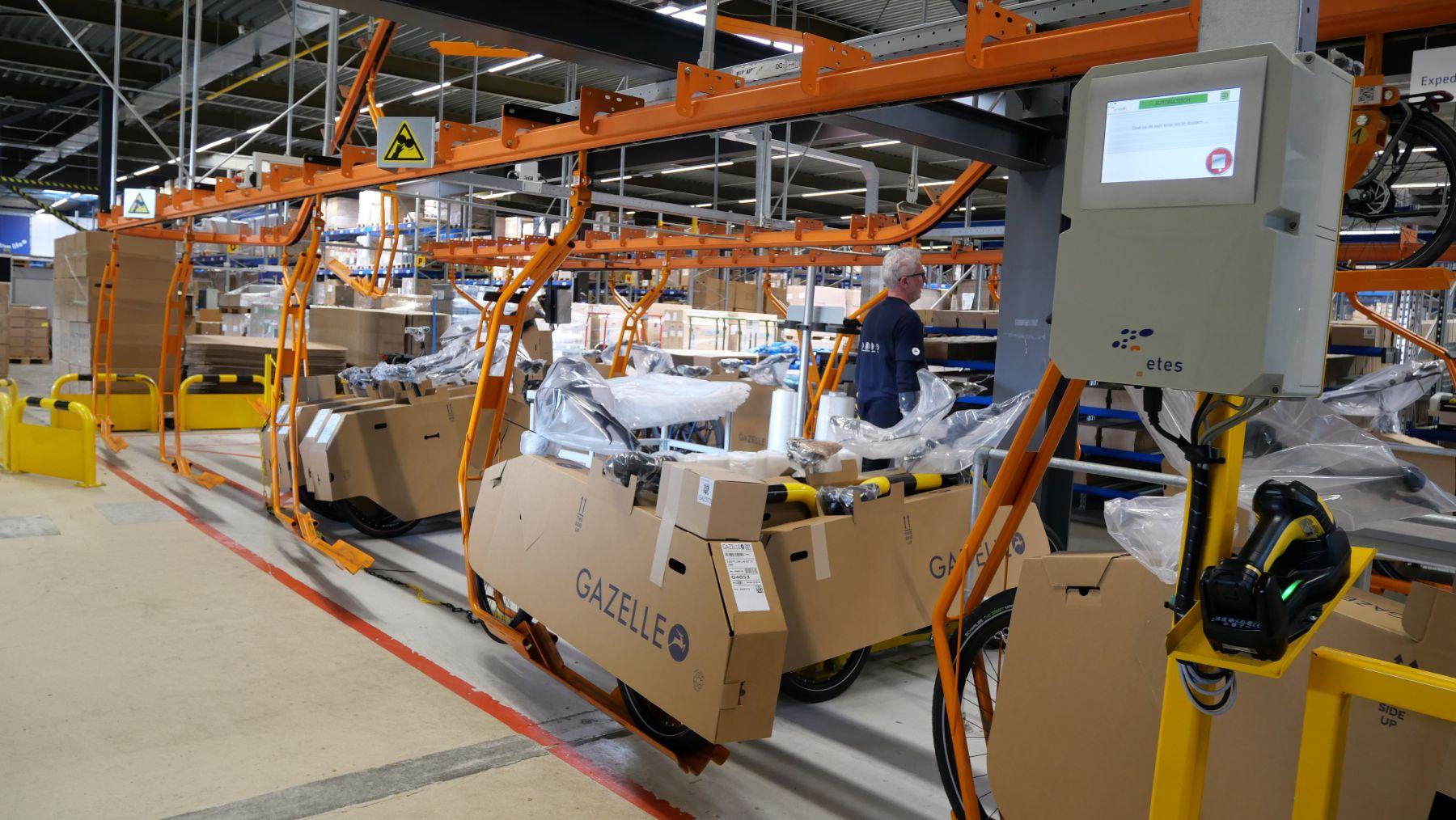
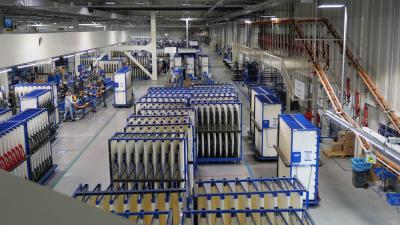
“Here in Dieren, we have three final assembly lines, each having 27 workstations,” explains Harro de Vries, plant manager, adding that all models can be assembled on each line. Gazelle currently produces 15 different models in up to six sizes in Dieren. For maximum efficiency, each of the stations has a maximum allocated time of 85 seconds for the operator to complete their task. “We operate one day shift, five days per week and have the target to build 1,000 e-bikes per day,” said De Vries, adding that every 30 seconds a new bike leaves the factory. All complete bikes are directly packaged (without the battery), put straight into a delivery truck and transported to a storage centre. Distribution is then handled by a third-party logistics partner for deliveries across Europe.

Before entering the final assembly line, the pre-assembly and wheel assembly are carried out in a designated part of the factory. Overlooking the workers is a suspended walkway that invites members of the public to observe the factory floor from above. “Here we offer maximum transparency of our production practices — and we are proud to show our factory,” added De Vries.

The world’s longest paint line

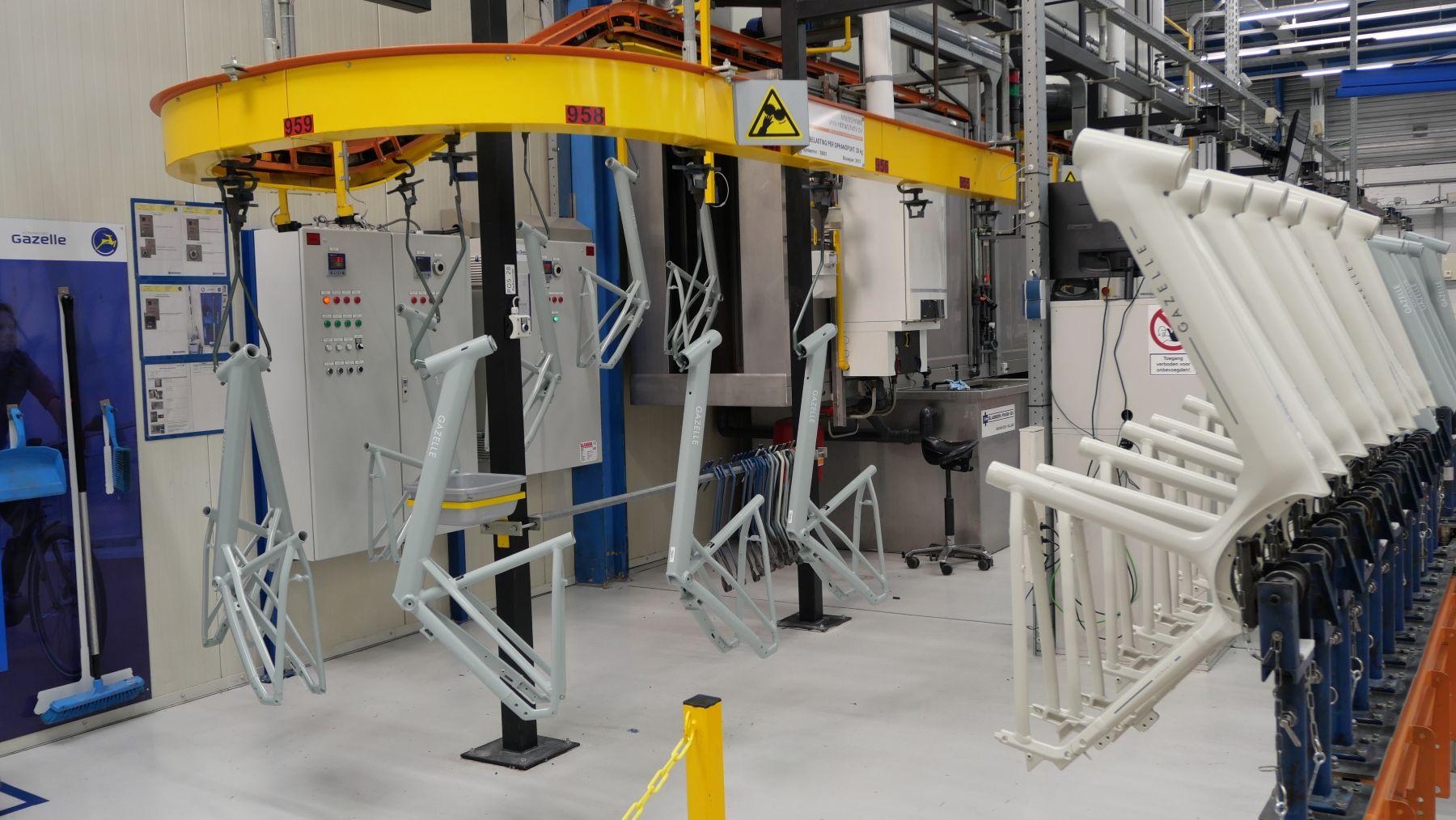
Every year, around 800,000 frames, forks and other components enter “the longest paint line in the world” in Gazelle’s factory in Dieren. On one long chain, each bicycle is given four coats of paint, and each application is quality-checked to ensure even, smooth coverage. Gazelle currently offers around 30 active colours in its range and spends considerable time developing new ones. Around 70,000 kg of paint is used in Dieren annually, with 0 kg of waste.

Gazelle – At a Glance

Location: Dieren, the Netherlands
Established: 1892, current building since 1902
Size of Location: 7,000 square metres
What is being produced: High-end e-bikes and bicycles, including paint shop
Annual capacity: 250,000-300,000 units
Main export markets: The Netherlands, Germany, Belgium, France, Scandinavia, the United Kingdom and the United States.
No. of employees: 500

The area also houses a small manual paint shop for prototypes and warranty frames. In some cases, when warranty frames have old colours, these are hand-painted. After the paint line is complete, decals are applied by hand to every single bicycle. This manual process is carried out by a team of nine people who apply transfers to 100 bikes per day. “This is a very difficult process to automate,” explains De Vries.

Global supply chain

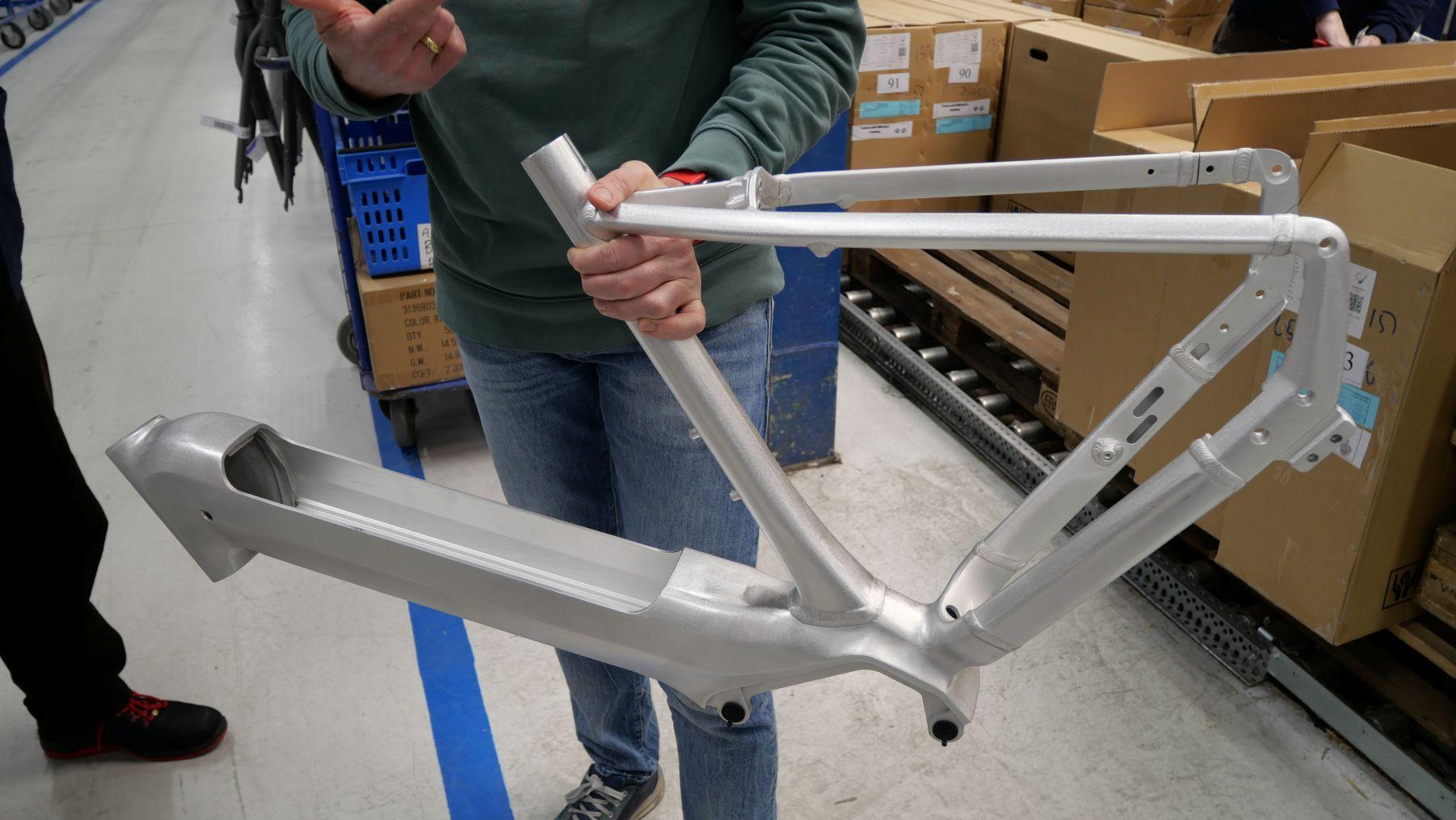
Gazelle currently sources its frames from both Europe and Asia. “Our European frames come from Triangles in Portugal, and we have various suppliers in Asia in both Taiwan and Vietnam, including Astro Tech,” said van Houweling. Gazelle keeps about 3-5 weeks’ worth of frames in stock at the factory and has made a conscious choice to invest in the paint shop rather than order pre-painted frames to keep quality in its own hands.

“Gazelle values its long-standing relationships with Asian partners, some spanning over 30 years, yet we are strategically expanding our European supply chain to increase resilience against global disruptions. While we aim to be less vulnerable, we must remain realistic; sourcing is a complex balance of quality and impact.”